Comparison
Oil vs acrylic for a portrait: which to choose
The whole difference is drying time, and everything else follows from it. Oil stays workable for days, so transitions can be blended and reblended — which is why it suits skin. Acrylic fixes in minutes and is built in layers, which costs nothing on a coat, a house or a landscape. We paint both; acrylic is the default and oil is on request.
Side by side
| Oil | Acrylic | |
|---|---|---|
| Drying | Days. The paint stays workable, so edges can be blended and reblended long after they were laid. | Minutes. Each layer is fixed almost at once, so the painting is built up rather than worked into. |
| Blending | Wet-into-wet across a whole passage. This is why oil suits skin, where the transitions are long and gradual. | Done in thin glazed layers instead. Achievable, but it is a different method, not the same method done faster. |
| Colour on drying | Shifts very little. What is mixed is what stays. | Darkens slightly as it dries. A painter who works in acrylic mixes for that; it is a reason not to switch mediums mid-painting. |
| Surface | Can be built very thick, and holds a visible ridge. Dries to a deeper, more varied sheen. | Holds texture well and dries more matt. Varnishing evens the sheen on either. |
| Yellowing | Oil mediums warm slightly over many decades, most visibly in whites. Restorable. | Does not yellow. |
| Shipping | Needs longer before it can be varnished and packed, and is sent flat or crated rather than rolled when fresh. | Stable sooner, and tolerates rolling in a tube better — which matters for freight on a large piece. |
| When we recommend it | Portraits of people where skin carries the picture, dark atmospheric work, anything that will be examined closely. | The studio default. Animals, landscapes, houses, strong colour, large sizes, and anything going a long way by freight. |
The short answer
What we would recommend, and why
If you have no preference, say so and we will choose for the subject. This is how that decision goes.
Choose oil for
- A portrait of a person where skin carries the picture
- Dark, atmospheric work with long gradual transitions
- Anything that will be looked at closely, from a metre or less
- A piece where you want the deeper, more varied sheen of oil
Choose acrylic for
- Animals, where coat and markings do the work
- Houses, landscapes and strong saturated colour
- Large canvases
- Anything travelling a long way by freight
The medium does not change how a piece is handled: the same painter takes it from drawing to varnish, the same progress photographs come to you while it is being painted, and the same proof is approved before anything ships.
What you can actually see
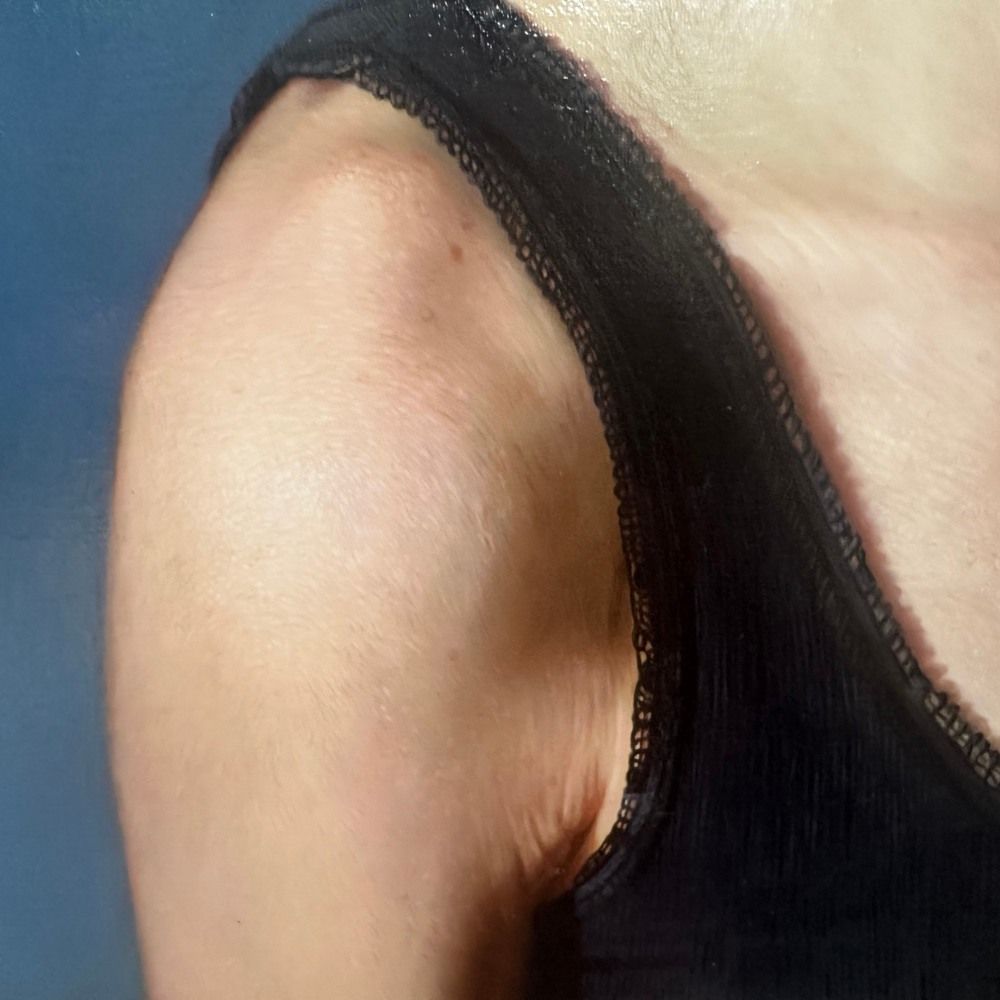
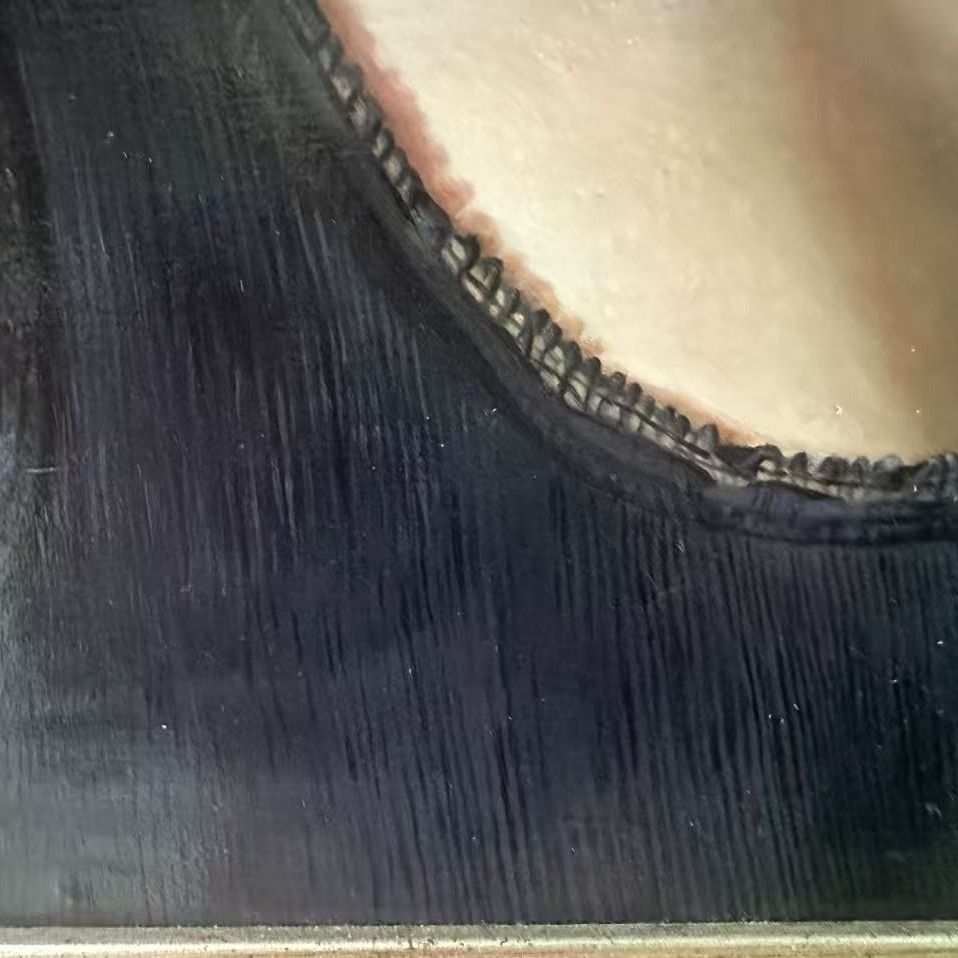
Both of these hold a brushstroke
The question people ask before this one is usually whether the painting is real at all. Both mediums leave a raised, directional surface that a print cannot imitate — these crops are from finished commissions at roughly four times life size.
Whichever medium a piece is painted in, a raking-light photograph goes out with the digital proof, so you can see the surface before it ships.
Oil vs acrylic: common questions
Which is better, oil or acrylic?
Neither, for the same job. They are different tools. Oil stays wet for days, so a painter can blend a transition and come back to it — which is why it suits skin, where the changes are long and gradual. Acrylic dries in minutes, so the painting is built in layers instead. For a dog’s coat, a house or a landscape, that difference does not disadvantage acrylic at all.
Why is acrylic your default?
Because most of what we paint is animals, places and buildings, where acrylic has no disadvantage, and because it is stable sooner — which matters when a painting has to be varnished, packed and freighted across the world. Oil is painted on request, at no difference in how the piece is handled or proofed.
Does acrylic look cheaper than oil?
Not in a finished, varnished painting. The difference people usually notice is sheen: oil dries to a deeper, more varied gloss and acrylic more matt. Varnishing evens that out, and the choice of a matt, satin or gloss varnish does more to the final look than the choice of medium does.
Will the oil painting go yellow?
Oil mediums warm slightly over many decades, most visibly in whites. It is gradual, it is part of why old paintings look the way they do, and a conservator can clean and revarnish an oil painting. Acrylic does not yellow.
Can a painting be rolled for shipping?
Acrylic tolerates rolling better and is stable sooner, which is why large acrylic pieces often travel rolled in a tube — far cheaper and safer than crating a stretched canvas. Fresh oil needs longer before it can be varnished and packed, and is more often sent flat or crated. We confirm the method per order once the size is settled.
Can I ask for charcoal, watercolour or pencil instead?
Yes. Charcoal and graphite on paper suit horses and single heads particularly well, and watercolour suits lighter, looser work. They are framed under glass rather than varnished, which changes how the piece is hung and shipped, so it is worth deciding early.
Not sure which to ask for?
Send the photo and tell us where the painting will hang. We will recommend a medium for the subject and say why — and if you already know what you want, just tell us.
Thank you — we have your inquiry.
We reply within 24 hours on business days. Want an answer sooner? Message us on WhatsApp and mention your name.
Open WhatsApp