Comparison
Hand-painted portrait vs AI-generated art: what is actually different
Two things, mainly. A painting measures your photograph instead of averaging toward a generic face — and it is an object with a surface, rather than a file that has to be printed to exist. Everything else follows from those.
Side by side
| Hand-painted portrait | AI-generated image | |
|---|---|---|
| What it is | Paint on canvas, made by a person over days, from your photograph. | An image file generated from a prompt and an input image, then usually printed. |
| Likeness | Measured. The gap between the eyes, the set of the mouth, the exact catchlight — drawn from your photograph and checked. | Approximated. Output drifts toward an average face, which is why AI portraits of people you know often feel subtly wrong without you being able to say why. |
| The physical object | Has a surface. The paint is raised, the varnish has a sheen, the canvas has tooth. | Has no surface of its own. Printed, it is a print — see the comparison above. |
| Detail that was not in the photo | Reconstructed from anatomy and from the painter asking you. If a photograph will not support a detail, we say so before you order. | Invented, confidently and without telling you. Extra fingers are the famous failure; an invented ear shape or a wrong number of whiskers is the common one. |
| Speed | Days of work. | Seconds. If you need an image today, this is genuinely the better tool, and we will say so. |
| What it is worth later | An object someone made. It can be insured, restored and inherited. | A file. It can be regenerated by anyone with the prompt. |
| Using one with the other | We will paint from an AI mock-up you made. It is a brief like any other, and what leaves the studio is still paint on canvas. | Useful for deciding a composition before committing — a pose, a background, who stands where. |
We paint. That is the bias in everything above, and it is worth saying out loud: for some jobs a print or a generated image is the right answer, and those rows are left in the tables rather than quietly dropped.
How to spot one
Four tells in a generated portrait
Useful whether you are buying from us or from anybody else.
The face is nearly right
The most reliable sign, and the hardest to describe. Generated portraits of someone you know well tend to land close and feel wrong — the gap between the eyes drifts, the mouth belongs to a slightly different person. The model is reproducing an average of many faces rather than measuring yours.
Detail appears where the photo had none
A blurred collar comes back as crisp embroidery. A dog’s shadowed ear grows fur that was never visible. The model fills gaps confidently and silently, and nothing tells you which parts are your animal and which are its best guess.
Counts go wrong
Fingers are the famous one. In pet and people portraits it is usually subtler: a collar buckle that does not fasten, teeth that do not meet, an earring on one side only, jewellery that changes shape across the image.
The surface is perfect
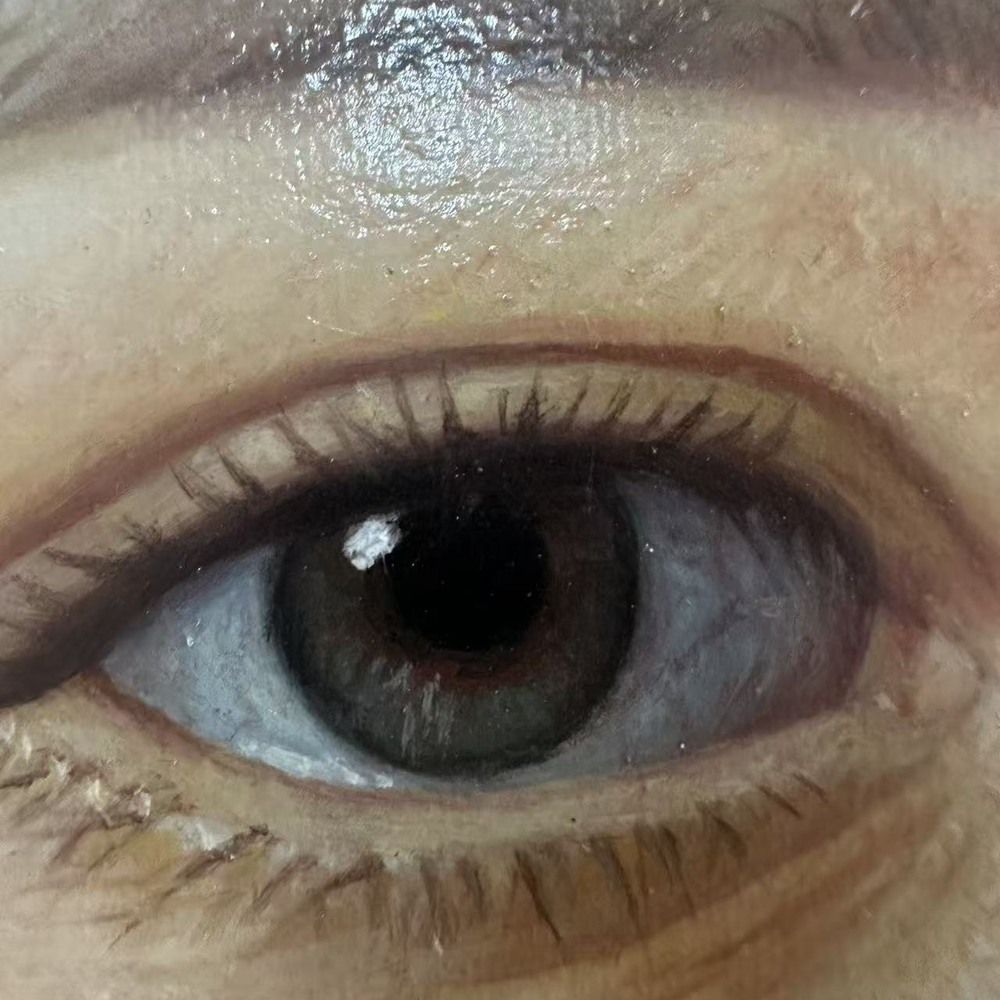
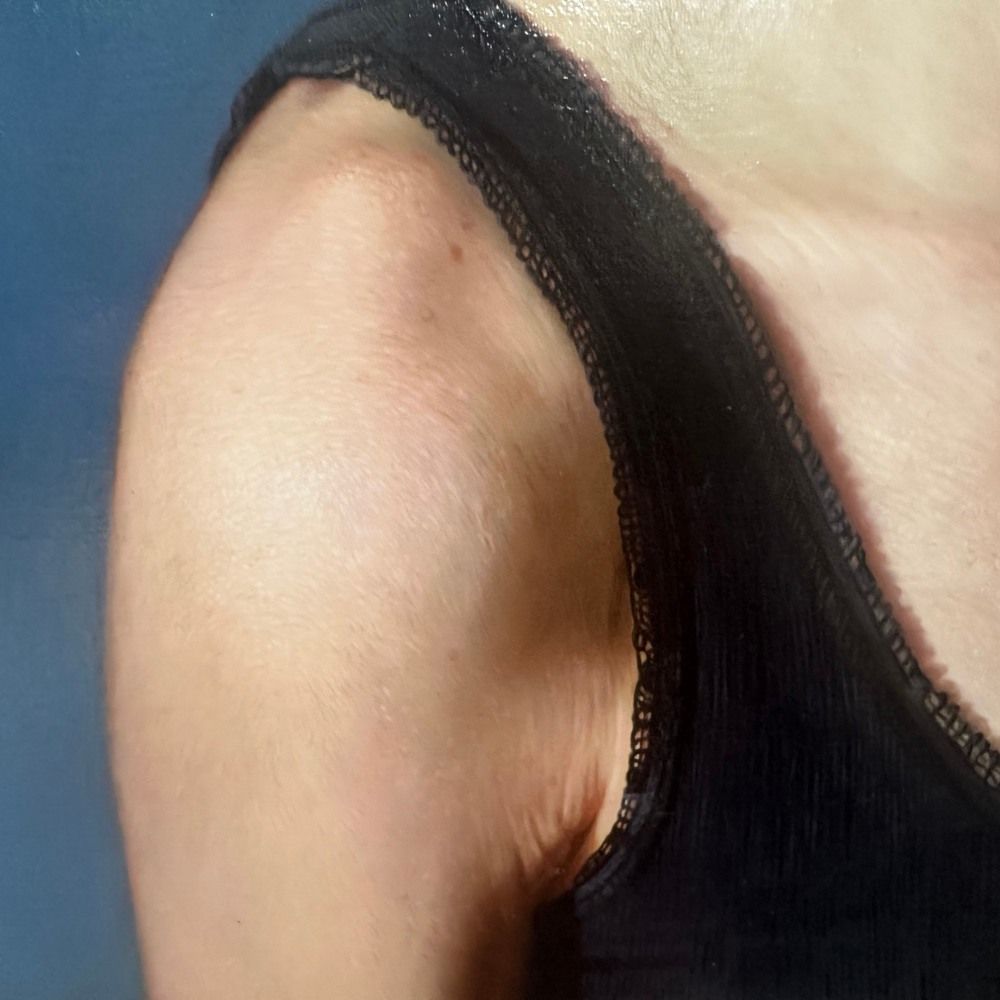
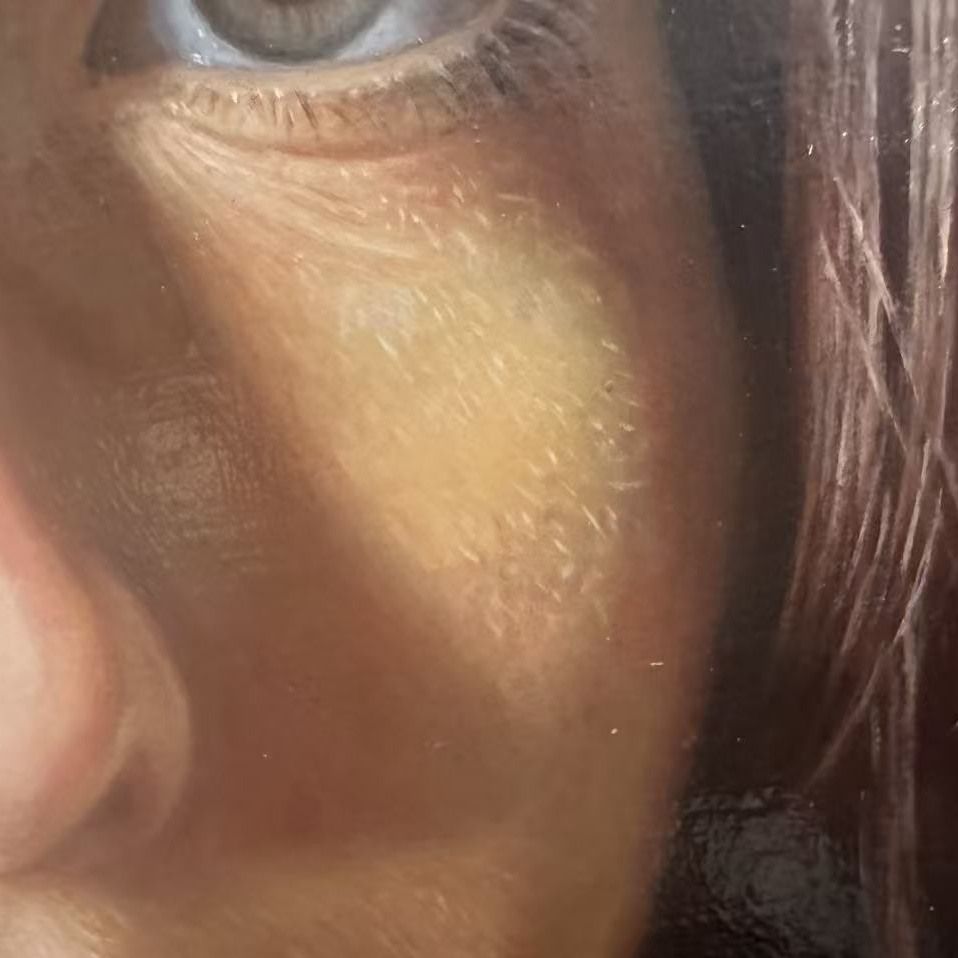
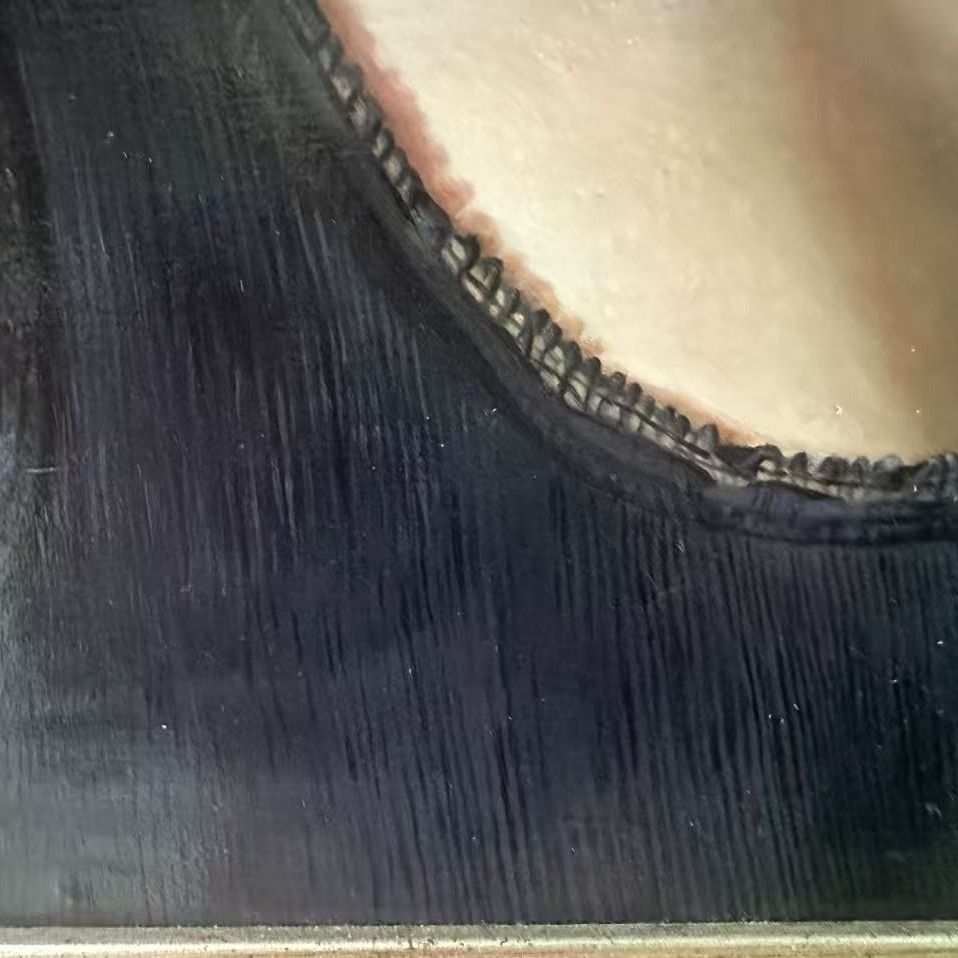
Printed, an AI image has no paint on it at all — so every one of the checks on our print page applies. "Brushwork" rendered into the file is a picture of brushwork; under raking light it stays as flat as the rest.
The difference you can photograph
A generated image has a smooth nothing where this is
Crops from finished commissions at roughly four times life size: the ridge of paint standing above the canvas, the direction of the bristles, the weave coming through where the paint is thin. This is the part that cannot be generated, only made.
Bring us your mock-up
If you made it with AI, that is just a brief
A lot of people now arrive with an image they generated — the dog in a particular setting, the family arranged a particular way, a style they like. That is genuinely useful. It settles the composition faster than a conversation does, and it tells us exactly what you are imagining.
Send it along with the real photographs. We paint the likeness from the photographs, because that is where your actual animal or your actual family is, and we take the pose, the setting and the mood from the mock-up. What leaves the studio is paint on canvas either way.
- Send the mock-up and the real photos together
- Tell us which parts of the mock-up matter and which were accidents
- We send a drawing for approval before any paint goes on
Hand-painted vs AI: common questions
Is a hand-painted portrait actually better than an AI-generated one?
For different things. If you need an image today, or you are testing a composition, a generated image is faster and cheaper and we will say so. For a portrait of someone or something you loved, that will be on a wall for decades, the differences that matter are likeness and the object itself: a painting is measured against your photograph rather than averaged toward a generic face, and it is a physical thing that can be insured, restored and inherited.
Will you paint from an image I generated with AI?
Yes, gladly. If you have mocked up what you want with an AI tool, that is a brief like any other — it tells us the pose, the background, the mood, who stands where. We paint from it by hand, and what leaves the studio is paint on canvas. Using AI to decide a composition before committing is a sensible thing to do.
How do I know your paintings are not AI images printed on canvas?
Light any of them from the side: paint casts shadows and a print does not. We send a raking-light photograph with every digital proof before shipping, and will send a macro crop of any part of a painting on request. There are four checks you can run yourself on our print comparison page, and they work on our work as well as anyone else’s.
Do you use AI anywhere in the process?
Not to make the picture. Every painting is drawn and painted by one painter from sketch to varnish — no printing, no tracing, no generated underlay. Like most businesses we use ordinary software for email and admin; none of it touches the canvas.
Can AI fix a bad photograph before you paint from it?
Upscaling or sharpening invents detail rather than recovering it, so what comes back is a confident guess at what your animal might have looked like. We would rather work from the original poor photograph and reconstruct what is missing from anatomy — and tell you honestly what the photo will not support — than paint somebody else’s invention of your dog.
Is AI art cheaper?
Enormously, and that is the honest trade. A generated image costs minutes of compute. A painting costs days of a painter’s time. If the picture does not need to be an object, the cheaper option is the right one.
Send a photo — or a mock-up
Tell us what you want painted and how you want it to look. If you made a mock-up with an AI tool, send that too; it is a brief, and a useful one.
Thank you — we have your inquiry.
We reply within 24 hours on business days. Want an answer sooner? Message us on WhatsApp and mention your name.
Open WhatsApp