Comparison
Hand-painted vs printed canvas: how to tell the difference
Light it from the side. Paint casts shadows and a print does not — that single test settles most cases in about five seconds, and you can do it on anything you are thinking of buying, including ours.
Four checks you can do yourself
None of these needs equipment, expertise, or our help.
- 01
Light it from the side
Hold a lamp or a phone torch almost parallel to the surface. Paint throws shadows — you will see the ridge of every stroke. A print is flat and looks identical however you light it. This one test settles most cases in about five seconds.
- 02
Look at the edges of the canvas
On a stretched painting the paint usually carries over the edge, irregularly, and often stops where the painter stopped. A print normally has the image either cut off dead square at the fold or mirrored neatly around the sides.
- 03
Find one edge in the image and follow it
In a painting the edge of a nose, an ear, a petal will be sharp in one place and dissolved in another, because a painter decided that. In a print every edge shares the same quality, because a camera or a file resolved them all at once.
- 04
Get close, or use your phone camera zoomed in
Paint shows pigment, bristle tracks and canvas grain coming through thin passages. A print shows a regular dot or line pattern, and often a faint colour fringe where the printheads overlap.
The evidence
This is what paint looks like close up
Crops from finished commissions at roughly four times life size. Look at the raised ridge where the light catches, the direction the bristles went, and the canvas weave showing through the thinner passages. A print has a regular dot pattern here; a generated image has a smooth nothing.
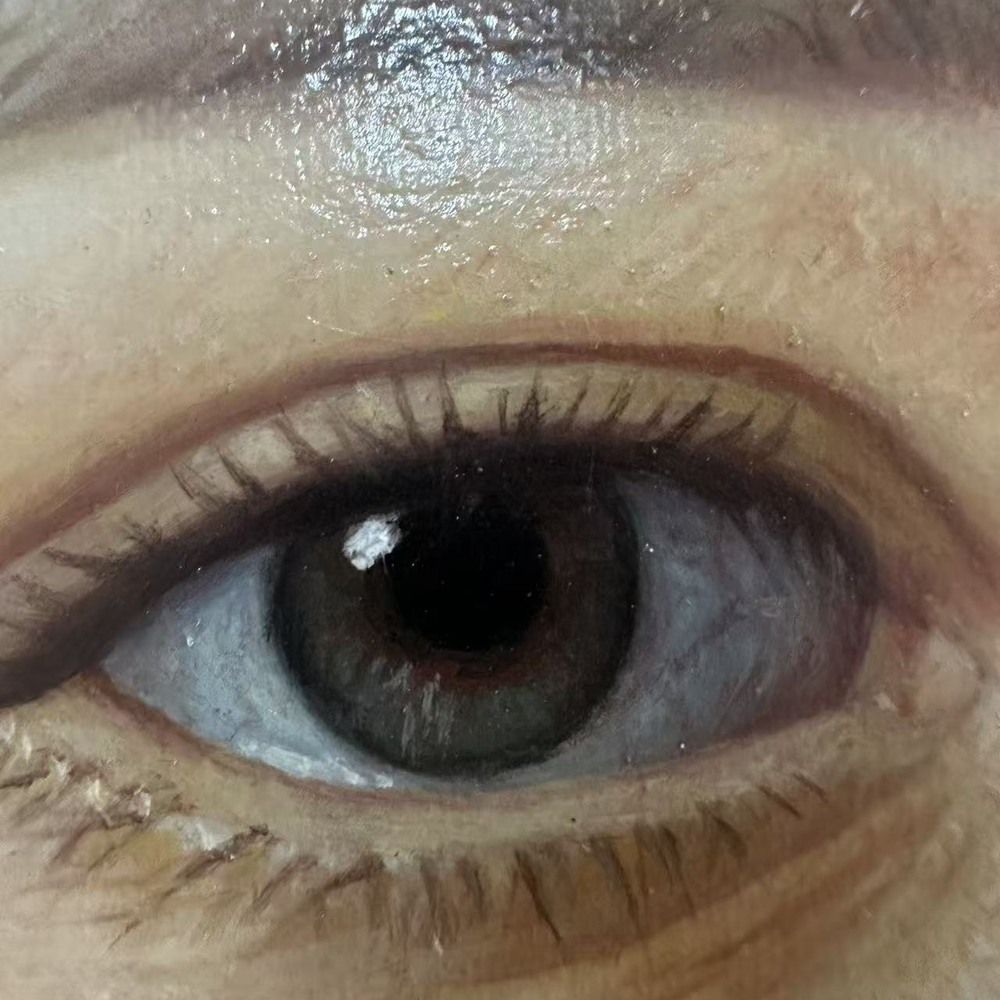
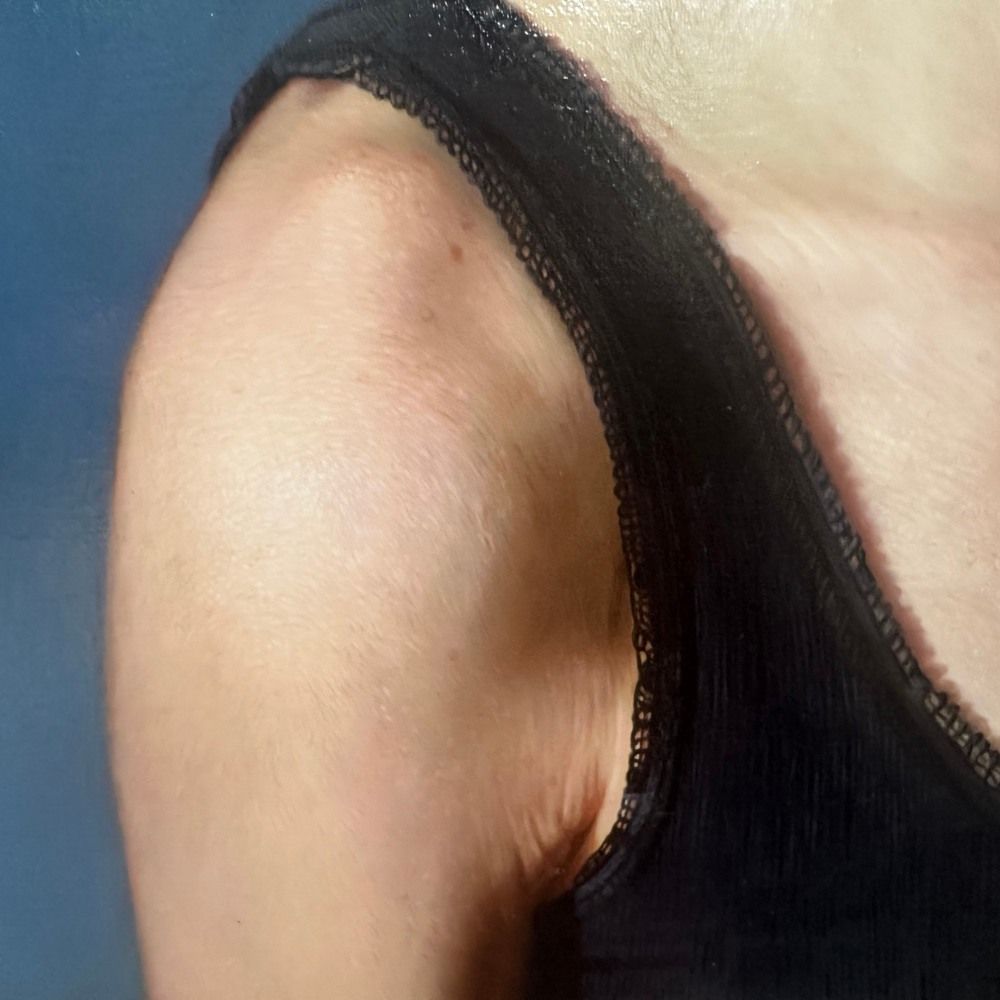
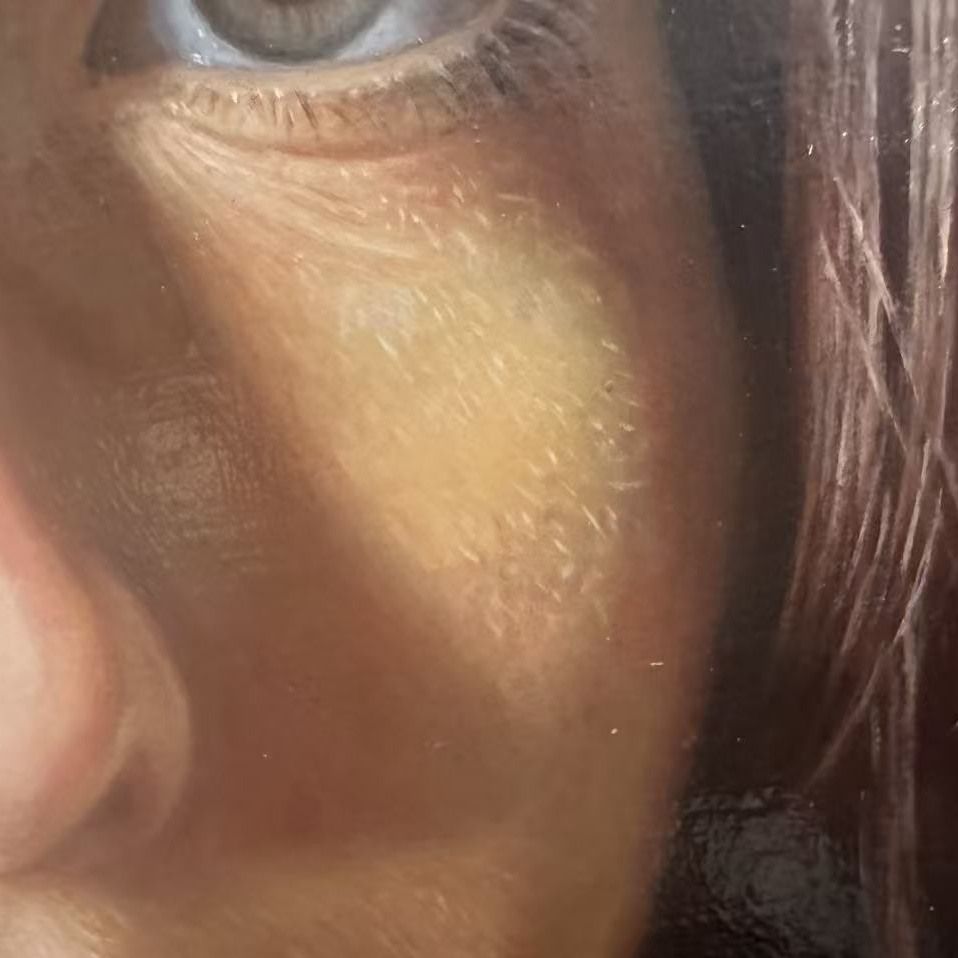
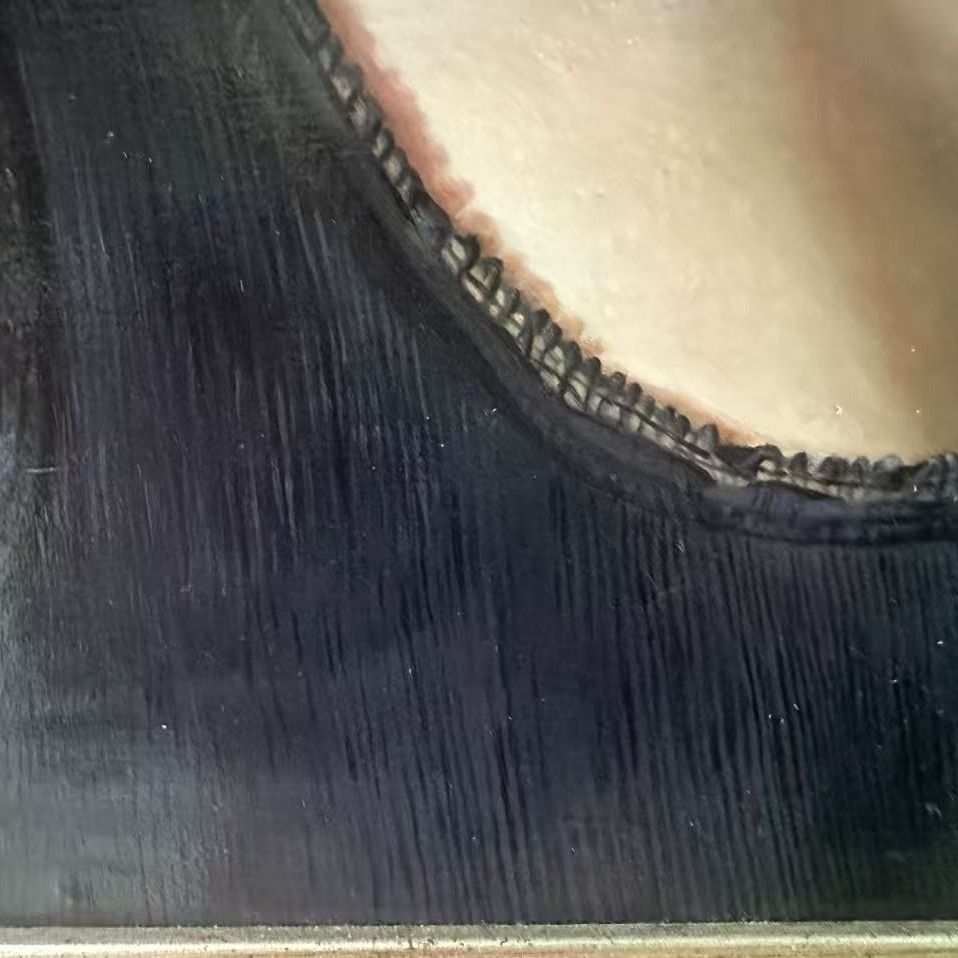
Tap any one to enlarge.
Side by side
| Hand-painted canvas | Printed canvas | |
|---|---|---|
| Surface | Paint sits above the weave. Brush marks catch light and cast small shadows; the surface is uneven to the touch. | Ink sits flat in the weave. The surface is uniform, and any "texture" is either the blank canvas or a clear gel layer rolled over the top. |
| Under raking light | Strokes throw shadows. The direction a brush travelled is visible across the whole picture. | Nothing changes. A print lit from the side looks the same as a print lit from the front — this is the single quickest test there is. |
| Edges | Vary deliberately — hard where a form turns toward you, lost where it turns away. No two edges in the painting are alike. | Uniform. Every edge was resolved by the camera or the file, so they share one quality across the whole image. |
| Under magnification | Pigment, bristle tracks, the canvas grain showing through thin passages. | A dot or line pattern, and often a slight colour fringe where the printheads overlap. |
| Changes before it ships | A background, a collar, an extra subject, a different expression — all possible while the painting is wet. | Fixed once the file is made. Changing anything means a new file and a new print. |
| Cost | Higher. Someone spent days on it. | Much lower, and honestly so. For a short-run promotional item or something that will be replaced within a year, a print is the sensible choice. |
| Over decades | Varnished oil and acrylic are stable for generations and can be cleaned and restored. | Pigment inks on canvas are rated in decades, not centuries, and a faded print cannot be restored — only reprinted. |
We paint. That is the bias in everything above, and it is worth saying out loud: for some jobs a print or a generated image is the right answer, and those rows are left in the tables rather than quietly dropped.
What we send
You see the surface before it ships
Every piece is photographed under raking light — lit from the side at about 45°, so the strokes throw shadows — and that photograph goes out with the digital proof. Nothing leaves the studio until you have seen it and said yes.
- A raking-light photograph with every proof
- A macro crop of any part of the painting, on request
- Progress photographs while it is being painted, not only at the end
Hand-painted vs print: common questions
What is the fastest way to tell a painting from a print?
Light it from the side, almost parallel to the surface. Brushstrokes cast small shadows and the whole surface becomes uneven; a print stays completely flat no matter how you light it. It takes a few seconds and needs nothing but a phone torch.
Some prints have texture on them — does that defeat the test?
Not under raking light. Gel or "brushstroke" coatings are rolled or sprayed over a finished print, so the texture does not correspond to anything in the image — the ridges run across a face or a sky without following any form. On a painting the texture and the picture are the same thing, because the strokes made the picture.
Is a print ever the better choice?
Yes. For short-run promotional pieces, for something that will be replaced within a year, or when you need many identical copies, a print is cheaper and entirely sensible. We paint, so treat that as our bias — but we would rather say it than pretend printing has no uses.
How do I know the painting you send me is not a print?
A photograph taken under raking light is sent with the digital proof of every piece, before it ships. You can also ask for a macro crop of any part of the painting. And when it arrives, the four checks on this page work just as well on our work as on anyone else’s.
Can you tell from a photograph on a website?
Often, but not always. Look for edges that vary in quality across the image, and for places where the paint surface catches light unevenly. If a seller only ever shows the image flat-on and never under side light, that is worth asking about.
Does hand-painted mean it will last longer?
Varnished oil and acrylic on a stretched canvas are stable for generations and can be cleaned and restored by a conservator. Pigment ink on canvas is rated in decades, and a faded print cannot be restored, only reprinted.
Ask us anything about the surface
Send a photo and ask for a macro crop, a raking-light shot, or both. We would rather you checked.
Thank you — we have your inquiry.
We reply within 24 hours on business days. Want an answer sooner? Message us on WhatsApp and mention your name.
Open WhatsApp